In our engineering department, we often see clients lose sleep over being undercut by competitors offering rock-bottom prices IP ratings 1. We analyze losing bids daily, and surprisingly, the primary cause of failure isn’t usually the price tag—it is the fine print in the technical specifications 2 that gets ignored.
While price is a critical factor in public tenders, technical compliance acts as the absolute gatekeeper. Non-compliant bids are typically disqualified immediately during the initial screening, regardless of how low the cost is. Ultimately, the winning bid is the one that balances the lowest price within the strict boundary of 100% technical adherence.
Let’s break down exactly how evaluation committees weigh these competing factors so you can stop guessing and start winning more projects.
How do I know if a lower price will get my bid disqualified for technical non-compliance?
When we review tender documents from regions like Armenia or Kazakhstan, we frequently spot specific “traps” in the specifications that cheaper, mass-market products simply cannot meet Technical Envelope 3. It is frustrating to see contractors risk their reputation on low-quality fixtures.
You can identify disqualification risks by cross-referencing specific parameters like efficacy, IP ratings, and driver brand requirements against the lower-priced offer. If a cheap fixture misses a critical certification or falls short on lumen output by even a small margin, it will likely face immediate rejection during the technical screening phase before pricing is even opened.
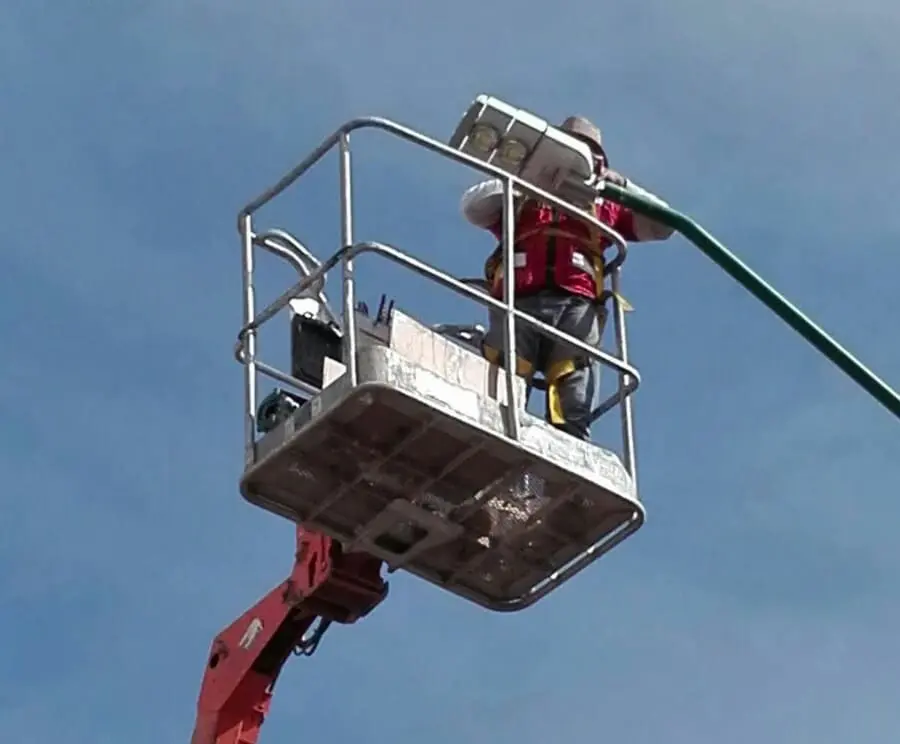
When you are preparing a bid for a municipal project, you must understand that the evaluation committee usually works in two distinct stages value engineering 4. The first stage is the Technical Envelope. This is a pass/fail test. If your product does not pass this stage, your price envelope is never opened. This is why a lower price is meaningless if the technical data is flawed.
The Binary Nature of Compliance
In our experience with public tenders, compliance is binary. There is no “close enough.” For example, if a tender specifies a Color Rendering Index (CRI) 5 of >70, a fixture with a CRI of 68 is not 97% compliant; it is 100% non-compliant. Many low-cost suppliers will try to convince you that these small deviations do not matter. They are wrong. In a competitive bid, evaluators are looking for reasons to eliminate bidders to make their final decision easier. A minor deviation is the easiest justification for disqualification.
Hidden Traps in Specifications
Cheap products often achieve their low price by cutting corners on invisible specifications. You might see a street light that claims 150 lumens per watt, which looks great. However, does it maintain that efficacy at the junction temperature specified in the tender?
Here are common “invisible” specs where low-price bids often fail:
- Surge Protection: Tenders often require 10kV/20kV protection. Cheap units might only offer 4kV or 6kV.
- Driver Brand: The tender might list specific acceptable brands (e.g., Meanwell, Philips, Inventronics). A generic “Factory Standard” driver will disqualify you.
- Decay Rates: The requirement might be L70 > 100,000 hours. Without an LM-80 report 6 to prove this, the bid is invalid.
We advise our partners to create a side-by-side comparison matrix before submitting any price. If you cannot check a box with 100% certainty, that lower price is a liability, not an asset.
Comparison of Critical Compliance Factors
| Parameter | Tender Requirement (Example) | Low-Cost Generic Bid Risk | Result |
|---|---|---|---|
| System Efficacy | ≥ 140 lm/W | Claims 140 lm/W (but actual is 110 lm/W) | Disqualification upon testing or data review. |
| Power Factor | > 0.95 | 0.90 or lower | Technical Fail. Often ignored by cheap suppliers. |
| Housing Material | Die-cast Aluminum ADC12 | Stamped Steel or Plastic | Material Non-compliance. Rejected for durability issues. |
| Warranty | 5 Years (unconditional) | 2 Years (or 5 years with exclusions) | Contractual Fail. Project managers reject this immediately. |
Can my supplier provide submission-ready datasheets that meet my specific tender requirements?
Our project support team spends hours every week editing IES files 7 and datasheets because we know that submitting a generic factory PDF is a guaranteed way to lose a tender. We understand that your reputation depends on the paperwork looking professional.
Your supplier must demonstrate the capability to customize technical documentation, including IES files, LM-79 reports, and datasheets, to match the tender’s exact line items. Generic catalogs are insufficient; look for a partner who proactively modifies specs and validates parameters before you submit your proposal to ensure seamless alignment with the evaluator’s checklist.
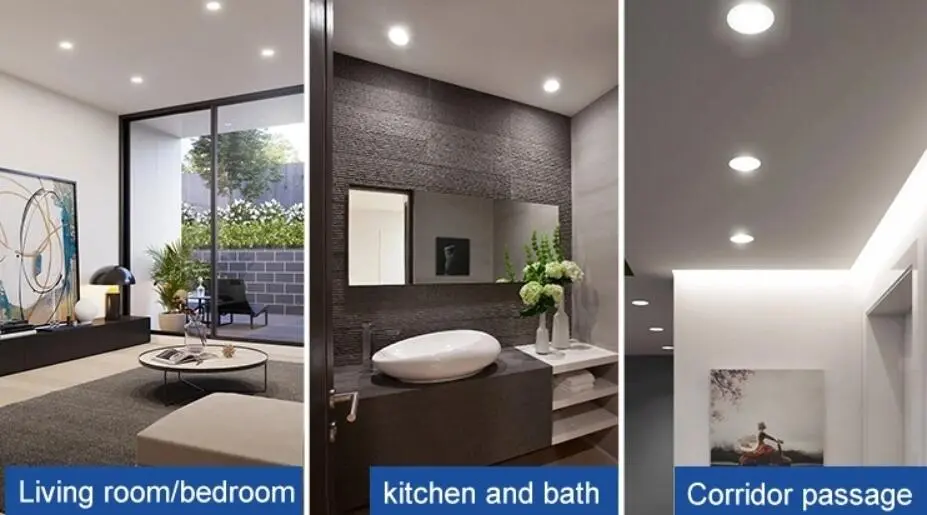
One of the biggest pain points we hear from project managers in Eastern Europe is the “Data Gap.” You find a factory in China that has a good product and a good price. You ask for the datasheet to put into your tender bid. They send you a poorly translated PDF with Chinese characters, blurry images, and technical parameters that contradict each other.
The Problem with “Standard” Catalogs
Standard marketing catalogs are designed for general sales, not for tenders. They often list ranges (e.g., “3000K-6500K”) instead of the specific value required (e.g., “4000K”). Tenders hate ambiguity. If the tender asks for “4000K Neutral White,” and your datasheet says “Available in various colors,” the evaluator has to guess. They do not like guessing.
We focus on generating Project-Specific Datasheets. This means if the tender item is “Item 1.1: 60W LED Street Light, 4000K, Grey Body,” the datasheet we provide should be titled exactly that. It should only show the data relevant to that specific configuration.
Essential Documentation Checklist
To win a tender, you need more than just a price list. You need a full technical dossier. A supplier who cannot provide these files quickly is likely just a trading company or a disorganized factory.
- IES Files: These must match the wattage and chip distribution of the proposed fixture.
- LM-79 & LM-80 Reports: Third-party verification of photometric performance and LED chip lifespan.
- ISO Certificates: Proof of the manufacturer’s quality management system (ISO9001, ISO14001).
- Declaration of Conformity (CE/RoHS): Mandatory for many markets to prove safety standards are met.
Documentation Readiness Levels
| Level | Supplier Output | Suitability for Tender |
|---|---|---|
| Level 1 | Generic catalog, Chinese text mixed with English, blurry photos. | Unusable. Will cause immediate rejection or require hours of your time to fix. |
| Level 2 | Standard English datasheet, but general specs (ranges rather than fixed values). | Risky. Evaluators may ask for clarifications, delaying the process. |
| Level 3 | Customized Datasheet. Header matches tender Ref No., precise specs, clean formatting, IES files attached. | Winning Standard. Builds trust with evaluators and looks professional. |
We believe that the supplier’s job is to save you time. If you are rewriting specs yourself, your supplier is not doing their job.
How can I balance cost control with the technical security I need to win public lighting projects?
We constantly tweak component choices in our lab to hit that sweet spot where the price drops enough to be competitive, but the specifications remain bulletproof. It is a delicate game of engineering, not just accounting.
Balancing cost and security requires a “value engineering” approach where you select mid-range, certified components that meet the exact tender specifications without over-engineering. Focus on meeting the mandatory criteria for lumens and lifespan, rather than paying for premium brand names that the tender document does not explicitly require or reward.

The goal in a tender is not to supply the best light in the world. The goal is to supply the most cost-effective light that fully meets the requirements. This distinction is vital. If you offer a Rolls-Royce when the client asked for a Volkswagen, you will lose on price. If you offer a bicycle, you will lose on compliance. You need to offer the exact Volkswagen asked for.
Avoiding Over-Specification
A common mistake we see is “Specification Creep.” This happens when a client sees a tender requirement for 130 lm/W and decides to offer 160 lm/W “just to be safe.”
While this sounds good, higher efficacy usually requires more expensive LED chips or driving the LEDs at a lower current (requiring more chips). This increases your cost. If the tender evaluation is pass/fail on technicals and then 100% price-based, your superior product will lose because it is 10% more expensive.
Smart Component Selection
To control costs without risking compliance, we look at the internal components.
- Drivers: If the tender demands “Philips Driver,” you must use Philips. If it says “Top Brand or Equivalent,” we can use a high-quality domestic brand like Sosen or Done. These drivers have 5-year warranties and similar specs but cost 20-30% less.
- LED Chips: You do not always need Cree or Osram. Brands like Lumileds or San’an can provide excellent performance and LM-80 reports at a fraction of the cost, provided they meet the efficacy targets.
- Body Size: Sometimes a smaller housing can dissipate enough heat for the required wattage if the thermal design is good. Using a smaller mold saves on aluminum and shipping freight.
Cost vs. Risk Matrix
| Strategy | Cost Impact | Compliance Risk | Verdict |
|---|---|---|---|
| Premium Everything (Top Tier brands only) | High ($$$) | Very Low | Too Expensive. Likely to lose on price. |
| Optimized Spec (Mid-tier brands, meets exact specs) | Medium ($$) | Low | The Sweet Spot. Best chance of winning. |
| Budget Build (No-name driver, recycled aluminum) | Low ($) | Very High | Dangerous. Risk of failure and penalties. |
By understanding exactly where the line is drawn, we can build a product that sits safely inside the green zone without inflating the budget.
How do I identify a supplier who understands the technical risks of my specific tender?
During initial chats with new partners, if a supplier says “yes” to everything without asking for the voltage or surge protection 8 details, we get worried for them. Real engineering support starts with asking the hard questions, not just agreeing to get the order.
A capable supplier will ask detailed questions about the tender’s specific constraints, such as ambient temperature ratings or control system compatibility, before quoting. They identify potential compliance gaps in your bill of quantities and offer corrective advice, acting as a technical consultant rather than just an order taker to protect you from future liabilities.
The most dangerous supplier in a tender scenario is the “Yes-Man.” You send them a complex specification document, and five minutes later, they reply with “No problem, we can do it, here is the price.”
This is a red flag. Real tenders are complex. They often contain contradictions or outdated requirements (like asking for high-pressure sodium specs in an LED tender). A supplier who understands risk will read the document and come back to you with questions.
The Technical Audit
When we receive a tender pack, we perform a Technical Audit before we even talk about price. We look for:
- Contradictions: Does the tender ask for 3000K in the text but 4000K in the table?
- Feasibility: Is the requested lumen output physically possible in the requested size?
- Environment: Is the project in a coastal area? If so, we need to discuss salt-spray testing and powder coating thickness.
Signals of Competence
You can judge a supplier by the quality of their questions.
- Bad Supplier: “How many pieces? What is your target price?”
- Good Supplier: “I see this project is for a tunnel. The tender requires 0-10V dimming, but do you also need the DALI protocol for the central controller? Also, the mounting height suggests we need a narrow beam angle, but the text says 120 degrees. Can you clarify?”
Supplier Risk Assessment Table
| Indicator | “Box Mover” Supplier | “Tender Partner” Supplier |
|---|---|---|
| Response Speed | Instant quote (Suspiciously fast). | Slower initial response (Time taken to analyze). |
| Documentation | Sends generic files. “You fix it.” | Sends marked-up docs highlighting compliance. |
| Problem Solving | Ignores technical contradictions. | Flags issues and suggests specific RFIs (Request for Information). |
| Focus | Price per unit only. | Total Technical Compliance. |
Finding a partner who acts as a second pair of eyes on your specifications is invaluable. It prevents the nightmare scenario of winning a tender and then realizing you cannot supply what you promised.
Conclusion
Winning LED lighting tenders is rarely about having the absolute lowest price on the market. It is about having the lowest price that is fully compliant. The technical barrier is the first hurdle; if you trip there, your price does not matter. By working with a supplier who provides “submission-ready” documentation, audits your specs for risks, and helps you value-engineer the product to meet requirements exactly, you shift the odds in your favor. Secure the technical side first, and the commercial win will follow.
Footnotes
1. Defines IP ratings and their significance for LED lighting protection. ↩︎
2. Explains the role and importance of technical specifications in public procurement. ↩︎
3. Explains the double envelope system in procurement, separating technical and financial bids. ↩︎
4. Replaced with an authoritative government source (acquisition.gov) providing policies and procedures for value engineering, aligning with the procurement context. ↩︎
5. Provides a clear definition and explanation of the Color Rendering Index for LED lighting. ↩︎
6. Explains the LM-80 standard for measuring LED lumen maintenance and color shift. ↩︎
7. Describes IES files as a standard format for photometric data in lighting design. ↩︎
8. Details surge protection requirements and standards for LED lighting systems. ↩︎