We often see project managers celebrate a big win, only to panic weeks later when the sample fails a lab test or the profit margin evaporates due to unexpected costs technical compliance 1. At our factory, we know that winning the bid is just the starting line, not the finish. The real challenge is executing the project without letting technical pitfalls or supply chain surprises destroy the value of the contract you worked so hard to secure.
To avoid common post-tender risks, you must immediately audit your supplier’s technical compliance against the final contract terms. Secure a fixed-price agreement to buffer against material cost fluctuations, establish a strict pre-shipment inspection protocol, and maintain a 15% contingency budget for site-specific changes during installation.
Let’s look at the specific hurdles you will face and how we help our partners clear them safely.
How can I ensure my delivered LED fixtures strictly match the technical parameters in my winning bid?
Our engineering team frequently receives panic calls from contractors whose previous suppliers swapped LED chips 2 silently to save a few cents fixed-price agreement 3. Nothing hurts your reputation more than installing 500 street lights only to have the lux meter show they are 20% dimmer than promised, or having the color temperature drift after just a few months.
You ensure strict compliance by demanding a pre-production “Golden Sample” that is independently tested and sealed. Require your manufacturer to provide a component list (BOM) locking in specific LED chips and drivers, and refuse any unapproved substitutions during the mass production phase.

Winning a tender often requires promising very specific technical parameters—lumens per watt, color rendering index (CRI), and surge protection levels pre-shipment inspection protocol 4. The risk arises when the factory tries to optimize their costs during mass production by using “equivalent” components that are not actually equivalent.
The “Golden Sample” Protocol
The most effective way to lock in quality is the “Golden Sample 5.” Before we start mass production for any tender project, we produce one perfect unit. We send this to the client, or more often, to a third-party laboratory critical path 6. Once this sample passes all tests, it is sealed and signed. This unit becomes the physical standard against which all future shipments are measured LM-79 7.
If a dispute arises later—for example, if the site engineer claims the light distribution is wrong—you can compare the installed unit directly to the Golden Sample. Without this physical evidence, you are relying on paper datasheets, which can be easily disputed or manipulated.
Locking the Bill of Materials (BOM)
Many buyers look at the final fixture but ignore what is inside. To ensure consistency, you must lock the Bill of Materials (BOM) 8. This means the contract with your supplier should list the exact brand and model of the critical components: the LED chip, the driver, and the lens.
In the LED industry, “binning” is a critical concept. LED chips are sorted by brightness and color. A cheaper “bin” might look the same but perform 10% worse. By specifying the exact bin code in your contract, you prevent the factory from using lower-grade leftovers.
Table: The Risk of Generic vs. Locked Specifications
| Component | Generic Request (Risky) | Locked Specification (Safe) | Potential Risk |
|---|---|---|---|
| LED Driver | “High quality driver” | “Philips Xitanium Xi LP 150W 0.7A” | Supplier uses a non-isolated local brand driver that fails in 6 months. |
| LED Chip | “3030 SMD Chip” | “Lumileds 3030 2D, Bin Code M4” | Lower flux bin results in failing the lux level test on the road. |
| Housing | “Die-cast aluminum” | “ADC12 Aluminum with AkzoNobel Powder Coating” | Poor alloy purity leads to corrosion or paint peeling after one winter. |
| Surge Protection | “10kV SPD” | “MeanWell SPD-10-230S (Series Connection)” | Cheap SPD fails to protect the light during the first thunderstorm. |
By defining these details, you shift the risk. If the product fails, the supplier cannot claim they met the “general” requirements. They failed the specific BOM requirement, making them liable for the replacement.
What steps should I take to prevent shipping delays from impacting my project completion date?
When we export to landlocked countries like Armenia or Moldova, we know that one missing document can trap a container at the border for weeks. Waiting until the goods are ready to think about logistics is a recipe for penalty fees, especially when your project contract has strict daily fines for late completion.
Prevent shipping delays by mapping the critical path backwards from your installation deadline, adding a two-week buffer for customs clearance. Coordinate with your manufacturer to book shipping space 14 days in advance and ensure all import licenses and conformity certificates are verified before the container leaves the factory.

Shipping is often treated as an afterthought, but in tender projects, it is the most common cause of penalties. For our partners in regions like Eastern Europe or Central Asia, logistics are complex. You are not just dealing with sea freight; you are often dealing with trans-shipment to trucks or rail, crossing multiple borders.
The Backward Scheduling Method
Do not ask your supplier “When can you ship?” Instead, tell them “The goods must arrive by this date.” Work backward from that date.
- Installation Deadline: October 1st.
- Customs Buffer: Allow 2 weeks (September 15th).
- Inland Transport: Allow 10 days from the port (September 5th).
- Ocean Freight: Allow 35-40 days (July 25th).
- Production Time: Allow 30 days (June 25th).
This means if you place the order on July 1st, you are already late. You need to visualize this timeline before you sign the contract. We always advise our clients to add a “Safety Buffer” of at least 14 days to account for port congestion or bad weather.
Documentation Bottlenecks
The physical movement of goods is rarely the problem; the paperwork is. A container can sit at the port of Poti or Bandar Abbas for weeks simply because the HS Code 9 on the invoice does not match the HS Code on the Certificate of Origin.
In tender projects, the government often provides a tax exemption or VAT waiver for imported materials. This requires specific wording on the Commercial Invoice. If the factory uses their standard template instead of your required format, the customs broker will reject it. You must send draft documents to your broker for approval before the ship sails. Once the Bill of Lading is issued, correcting it takes time and money.
Logistics Checklist to Avoid Delays
| Timeline Phase | Action Item | Responsibility |
|---|---|---|
| Order Placement | Confirm specific HS Codes and VAT ID format. | Buyer |
| Production Mid-Point | Book vessel space (especially during peak season). | Supplier / Forwarder |
| 1 Week Before Ship | Send draft Invoice and Packing List for approval. | Supplier -> Buyer |
| Loading Day | Photos of loading and container seal sent to buyer. | Supplier |
| Vessel Departure | Telex Release or Original BL sent via courier immediately. | Supplier |
By managing these steps proactively, you remove the “surprise” element from logistics. You cannot control the weather, but you can control the paperwork.
How do I verify that my supplier’s documentation will pass the final technical inspection?
Our support team spends hours correcting IES files and CE certificates because many factories just copy-paste data from old projects. If the supervising engineer spots one error in your paperwork, they will scrutinize every single screw in your project, looking for reasons to reject the handover.
Verify documentation by conducting a “paper audit” before mass production begins. Check that test reports (LM-79, LM-80) come from accredited labs and that the model numbers on certificates match your bid exactly. Discrepancies in model naming are the leading cause of rejection during final technical inspections.

In public tenders, the paperwork is as important as the product. A perfect street light will be rejected if the test report says “Model A” but the label on the light says “Model B.” This sounds trivial, but we have seen payments frozen for months over such clerical errors.
The “Model Name” Trap
This is the most common mistake. During the bidding phase, you might offer a generic model name like “CST-ST-100W.” However, the factory’s internal code might be “XJ-998-100.”
When the goods arrive, the inspector looks at the contract, which says “CST-ST-100W.” Then they look at the CE certificate, which says “XJ-998-100.” They will reject it. You must ensure that the factory creates a “Declaration of Identity” or customizes the label and reports to match the exact string of text in your winning contract. Consistency is key.
Accredited Lab Reports vs. Factory Declarations
Not all documents are created equal. A “Test Report” issued by the factory’s own internal lab carries very little weight in strict tenders. Project owners want to see reports from accredited third-party labs (like TUV, SGS, or DEKRA) or labs that are signatories to the ILAC-MRA arrangement.
Specifically, for LED lighting, you need:
- LM-79-08: Tests the photometric performance (light output, beam angle).
- LM-80 / TM-21: Predicts the lifespan of the LED chip.
- IP Rating Report: Proves resistance to dust and water.
- IK Rating Report: Proves impact resistance.
If your supplier sends you a one-page PDF that looks like it was made in Word, be suspicious. Valid reports are dozens of pages long and include raw data, photos of the setup, and accreditation numbers.
Essential Documents for Public Lighting Tenders
| Document Name | Purpose | Key Checkpoint |
|---|---|---|
| CE Declaration of Conformity | Legal safety requirement for EU/associated markets. | Must cite specific EN standards (e.g., EN 60598-1, EN 60598-2-3). |
| IES / LDT Files | Digital file for lighting simulation. | Open it in Dialux to check if the total flux matches the datasheet. |
| LM-79 Report | Validates light output and power. | Ensure the tested voltage (e.g., 220V) matches your grid. |
| Warranty Certificate | Guarantees support period. | Must explicitly state “5 Years” and cover both driver and housing. |
| Instruction Manual | Guide for installation. | Must be in the local language of the project site. |
Auditing these documents early saves you from the nightmare of trying to get a Chinese factory to generate new reports for products that have already been shipped and installed.
How can I protect my profit margins if the project site requirements change after the award?
We have seen projects where the pole spacing changed after the contract was signed, rendering the original optics useless. If you swallow the cost of new lenses or higher wattages, your margin disappears; if you fight the client, you lose the relationship. Flexibility is your only financial safety net.
Protect your margins by including a “Variation Clause” in your contract that defines unit costs for scope changes. Maintain a close relationship with your manufacturer to allow for modular adjustments, such as swappable lenses or adjustable drivers, which minimize the cost of adapting fixtures to new site conditions.
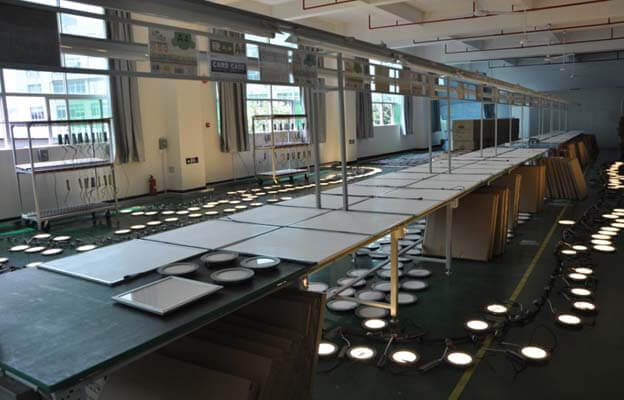
It is a universal truth in construction: the site drawings never perfectly match reality. Perhaps the street is wider than on the plan, or the poles are 8 meters high instead of 10. If you have already ordered fixed-output 100W lights with Type II optics, and the site now requires 120W with Type III optics, you are in trouble.
Modular Design as Financial Insurance
When we work with tender winners, we advise them to choose “Modular” or “Field-Adjustable” fixtures whenever possible, even if they cost 5% more upfront.
- Adjustable Wattage: Use LED drivers that have a DIP switch or NFC programming. If the client decides the light levels are too low, we can simply program the driver to output more current (provided the thermal design allows it), rather than shipping 500 new fixtures.
- Interchangeable Lenses: Some street lights allow you to unscrew the lens plate and replace it. If the road geometry changes, you only need to air-freight new plastic lenses, not whole aluminum heads.
This technical flexibility acts as financial insurance. It reduces the cost of a “Change Order” from thousands of dollars to just a few hundred.
Negotiating Change Orders
You must establish boundaries with the project owner. If the requirements change, the price must change. However, you can protect your relationship by offering solutions that are cheaper for them than a full re-order.
For example, if they need to add a “Smart City” NEMA socket that wasn’t in the original bid:
- Rigid Supplier: “We need to re-cast the housing. 60 days lead time. $50 per unit extra.”
- Flexible Supplier (Us): “We can drill the NEMA hole on the existing stock and add the receptacle kit. 5 days delay. $8 per unit extra.”
By having a supplier who understands the engineering behind the product, you can offer these low-cost adaptations. This makes you look like a problem solver rather than a problem maker, protecting both your margin and your reputation.
Conclusion
Winning a tender is only 20% of the battle; the other 80% is successful execution. By locking in your technical specs with a Golden Sample, planning logistics backward from the deadline, auditing your paperwork early, and building flexibility into your product choice, you protect your project from failure. If you need a partner who understands these risks and has the documentation to back you up, reach out to us. We are ready to help you deliver.
Footnotes
1. Explains the importance of meeting contract specifications. ↩︎
2. Provides background on a key component in LED lighting. ↩︎
3. Defines a contract type to mitigate cost fluctuations. ↩︎
4. Replaced HTTP 404 with an authoritative guide to pre-shipment inspection from a quality control company. ↩︎
5. Defines a critical quality control method in manufacturing. ↩︎
6. Explains a project management technique for timely delivery. ↩︎
7. Identifies a standard test for LED lighting performance. ↩︎
8. Explains the importance of specifying components for product consistency. ↩︎
9. Highlights the importance of correct classification for customs. ↩︎